
If a car accident in Hoboken left you injured or unsure what to do next, call Metro Law at 973-344-6587 to talk to our car accident lawyer and get clear guidance on your options.
You should contact a car accident lawyer in Hoboken as soon as you are injured, your vehicle is damaged, or an insurance company becomes involved. Early legal guidance helps protect evidence, avoid insurance mistakes, and clarify fault before the situation gets more complicated.
Car crashes in Hoboken often occur in tight spaces amid heavy traffic. Stop-and-go congestion along Observer Highway, sudden lane changes on Newark Street, and double-parking near Washington Street all raise the risk of rear-end and side-impact collisions. Add delivery vans, rideshare pickups, and limited visibility, and even low-speed crashes can lead to injuries that affect daily life.
At Metro Law, we represent Hoboken drivers, passengers, and pedestrians who were hurt in car accidents caused by someone else’s actions. We handle insurance claims, gather crash evidence, and build cases that reflect the full impact of the injury, not just the vehicle damage.
Our approach focuses on clear communication, early preparation, and local knowledge of how Hoboken car accident cases move through Hudson County. If you were involved in a car accident in Hoboken and have questions about what comes next, talk to our Hoboken car accident lawyer to understand your options.
What Are the Most Common Causes Of Car Accidents in Hoboken?
Most car accidents in Hoboken occur due to congestion, sudden stops, and limited space on local roads. Heavy traffic, double parking, delivery vehicles, and constant pedestrian activity create situations where drivers have very little room to react. Even short trips can turn into crashes when timing and visibility are tight.
Hoboken’s street layout plays a big role. Narrow lanes, short blocks, and frequent intersections increase the risk of contact between vehicles, cyclists, and pedestrians.
For statewide crash data and official reports used to track accident trends in New Jersey, you can review information published by the New Jersey Department of Transportation.
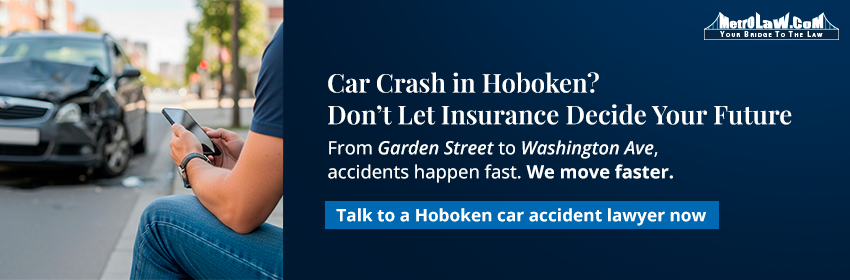
Stop-and-Go Traffic on Busy Roads
Certain areas see constant slowdowns:
- Observer Highway during peak commute hours
- Newark Street near downtown intersections
- Approaches to the Holland Tunnel
Sudden braking in these zones often leads to rear-end collisions.
Double Parking and Blocked Lanes
Double parking is common throughout Hoboken.
- Drivers swerve to avoid stopped vehicles.
- Sightlines get blocked at intersections.
- Traffic backs up with little warning.
These conditions increase side-swipe and low-speed impact crashes.
Delivery Vans and Rideshare Pickups
Commercial traffic adds pressure to local streets.
- Delivery vehicles stopping without notice
- Rideshare drop-offs in travel lanes
- Drivers rushing to meet schedules
These factors often combine with distracted driving.
Failure to Yield in Pedestrian Areas
Crosswalk-heavy areas create frequent conflicts.
- Washington Street intersections
- Areas near the PATH station
- Residential streets with heavy foot traffic
Drivers who misjudge gaps or rush through turns often cause collisions.
Distracted or Rushed Driving
Phones, navigation apps, and tight schedules affect attention.
- Missed signals or sudden lane changes
- Delayed reaction times
- Incomplete checks before turning or merging
In a dense city like Hoboken, even a brief lapse can lead to a crash.
Typical Injuries After a Car Crash in Hoboken
Car accidents in Hoboken often cause injuries that range from mild to serious, even when the crash happens at low speeds. Tight streets, frequent stops, and side-impact collisions can place sudden force on the body.
Some injuries show up right away, while others develop days after the crash. Because Hoboken crashes often happen in traffic or at intersections, injuries are not always obvious at the scene.
Neck and Back Injuries
Sudden braking and rear-end crashes often strain the spine.
- Whiplash and soft tissue damage
- Lower back pain that worsens over time
These injuries may limit movement and require therapy.
Head Injuries and Concussions
Head injuries can occur even without direct impact.
- Concussions from sudden movement
- Headaches, dizziness, or trouble concentrating
Early evaluation helps document symptoms properly.
Joint and Soft Tissue Injuries
Shoulders, knees, and hips often take the brunt of the impact.
- Strains from bracing during the crash
- Pain that affects daily activities
These injuries can interfere with work and routine tasks.
Broken Bones and More Serious Harm
Side-impact and higher-speed crashes may cause fractures.
- Arms, ribs, or collarbone injuries
- Injuries requiring surgery or extended recovery
Can Car Accident Injuries in Hoboken Get Worse Days After the Crash?
Yes. Many injuries take time to fully appear. Seeking medical care and tracking symptoms early helps connect the condition to the accident and protects your ability to recover compensation.
What Makes Car Accidents in Hoboken Different From Other Cities?
Car accidents in Hoboken are different because of the city’s density and the limited space drivers have to react. Short blocks, narrow streets, heavy foot traffic, and constant delivery activity increase the chance of sudden stops and side-impact collisions. Unlike larger cities, Hoboken mixes commuter traffic, residential streets, and commercial activity into a very small area.
Tight Streets and Short Blocks
Many Hoboken streets leave little space between vehicles. Drivers deal with frequent stop signs, parked cars on both sides, and limited visibility at corners. These conditions increase the risk of rear-end and side-swipe crashes.
Heavy Pedestrian Activity
Drivers must constantly watch for people crossing mid-block or stepping out from between parked cars. Areas near Washington Street and the PATH station create additional pressure, leading to sudden braking and missed turns.
Constant Delivery and Rideshare Traffic
Delivery vans and rideshare vehicles stop often and without much warning. That creates unexpected lane changes and blocked views, especially during peak hours.
Limited Time to React
Traffic moves in short bursts. A brief distraction or delayed reaction can cause contact because there is very little room to correct a mistake once traffic slows or stops.
For recent accident reports and updates across New Jersey, visit Metro Law’s accident news section.
How Does New Jersey Car Accident Law Apply to Hoboken Crashes?
New Jersey car accident law follows the same statewide rules in Hoboken as it does everywhere else, but local facts still shape how claims play out. Fault, insurance coverage, and filing deadlines are governed by state law, while Hoboken traffic patterns and crash locations affect how responsibility is evaluated.
How Fault Is Handled Under New Jersey Law
New Jersey uses a shared fault system. Recovery stays available if your share of fault is under 51 percent. Any recovery is reduced by your percentage of responsibility. In Hoboken, fault disputes often involve sudden stops, blocked lanes, or limited visibility.
How No-Fault Insurance Affects Hoboken Drivers
Car accident claims usually start with insurance coverage.
- Medical treatment may be paid through auto insurance first
- Lawsuits depend on injury severity and policy terms
Insurance issues often surface quickly after Hoboken crashes.
Filing Deadlines Still Matter
Most car accident claims follow a two-year deadline.
- Shorter notice rules may apply in certain situations
- Waiting can limit access to crash data and video
Does New Jersey Car Accident Law Change if the Crash Happened on a Hoboken Side Street?
The legal rules stay the same, but side-street crashes often raise visibility and right-of-way questions. Local layout and traffic patterns play a bigger role in how fault is reviewed.
Who Can Be Held Responsible For a Hoboken Car Accident?
More than one party can be responsible for a car accident in Hoboken, depending on how the crash happened. While another driver is often involved, responsibility may also extend to employers, vehicle owners, or other parties when their actions contributed to the collision.
Hoboken crashes often involve delivery vehicles, shared cars, or tight road conditions, which can make liability less straightforward.
Other Drivers
Most claims involve another driver’s actions.
- Following too closely in stop-and-go traffic
- Unsafe lane changes to avoid double-parked cars
Employers and Company Vehicles
When a driver was working at the time of the crash, their employer may share responsibility.
- Delivery vans making frequent stops
- Service vehicles operating on local routes
Vehicle Owners
The owner of a vehicle may be responsible even if they were not driving.
- Loaned or shared vehicles
- Cars are provided for work or errands
Maintenance or Repair Providers
Poor vehicle condition can contribute to crashes.
- Brake or tire issues
- Recent repairs that were done incorrectly
Public Entities in Limited Situations
Some crashes involve roadway conditions.
- Poor signage or signals
- Dangerous road design
These cases follow special rules and timelines, which makes early review important.
What if the Other Driver Says the Crash Was My Fault?
It is common for drivers to blame each other after a Hoboken car accident, especially in congested areas. A claim does not rely on one person’s statement alone. Fault is determined by evidence, not accusations made at the scene or to an insurance company. Disputes happen often when traffic stops suddenly or visibility is limited.
How Fault Is Reviewed
Insurance companies look at reports, vehicle damage, video footage, and witness accounts. In Hoboken, cameras from nearby buildings or intersections often play a key role in sorting out what actually happened.
Why Early Action Helps
Getting help early protects evidence and prevents the story from being shaped before all facts are known. Clear documentation helps push back when blame is placed unfairly.
What if the Other Driver Blamed Me at the Scene, But Later Changed Their Story?
If the other driver changes their story, the claim is still reviewed based on evidence, not shifting statements. Police reports, vehicle damage, camera footage, and witness accounts help establish what actually happened. Early documentation and medical records also help push back against blame that is not supported by facts.
How Long Do I Have to File a Car Accident Claim in Hoboken?
Most car accident claims in Hoboken must be filed within two years from the date of the crash. Missing this deadline usually ends the case, even if the accident caused real injuries. Crash victims must act early, so you’ll have time to protect evidence and understand your options without rushing. Two years can pass quickly, especially when medical treatment is ongoing.
The Standard Filing Deadline
New Jersey sets a two-year window for most car accident claims. The clock usually starts on the day of the crash. Waiting too long can block recovery entirely.
Situations With Shorter Time Limits
Some Hoboken crashes trigger faster notice rules.
- Accidents involving public vehicles
- Crashes tied to road conditions or city property
These cases may require action within months, not years.
Why Waiting Causes Problems
Delays often weaken otherwise strong claims.
- Traffic or security footage may be erased.
- Witness memories fade.
- Vehicles get repaired or sold.
Confirming the correct deadline early helps keep the claim on track and avoids last-minute surprises.
What Is My Hoboken Car Accident Case Worth?
The value of a Hoboken car accident case depends on how the crash affected your health, work, and daily life. There is no fixed amount because every accident involves different injuries, recovery times, and insurance issues. Two crashes that look similar on the surface can lead to very different outcomes. Hoboken cases often turn on details beyond vehicle damage.
Factors That Shape Case Value
Several elements influence how a claim is evaluated.
- Type and severity of injuries
- Length of medical treatment and recovery
- Time missed from work or limits on future work
- Strength of evidence showing fault
Clear medical records usually play a major role.
Hoboken-Specific Details That Matter
Local conditions often affect value.
- Camera footage from nearby buildings or intersections
- Witnesses from busy streets or residential blocks
- Involvement of delivery or company vehicles
These details help clarify responsibility, which directly impacts compensation.
Why Early Settlement Offers Can Be Risky
Insurance companies may offer money before the full picture is clear.
- Ongoing treatment may not be finished
- Future care may not be considered
- Long-term effects may be overlooked
Taking time to understand the full impact helps avoid settling for less than the case may support.
Consulting With a Car Accident Lawyer vs. Dealing With Insurance Alone
Handling a car accident claim on your own can put you at a disadvantage, especially when injuries or fault questions come up. Insurance companies manage claims every day, while most people do not. Having a lawyer helps balance that gap and keeps the focus on the full impact of the crash. In Hoboken, congestion and shared-fault arguments often make claims harder to manage without assistance.
What Dealing With Insurance Alone Looks Like
- Speaking directly with adjusters
- Giving recorded statements
- Collecting records and documents
- Reviewing settlement offers without guidance
These steps can feel manageable until disputes arise.
What a Car Accident Lawyer Handles
- Communication with insurance companies
- Evidence preservation and review
- Evaluation of injuries and losses
- Pressure for a fair resolution
Legal support helps reduce stress and protects long-term interests.
When the Difference Matters Most
The gap becomes clear in certain situations.
- Ongoing medical treatment
- Disagreements about fault
- Multiple insurance policies
- Injuries that affect daily life
In these cases, having legal guidance often changes how the claim moves forward.
What if the Insurance Company Seems Helpful at First?
Insurance adjusters may sound supportive early on, but their role is to limit payouts. Early cooperation does not mean long-term fairness. Having legal guidance helps protect against missed issues, undervalued injuries, and pressure to settle before the full impact of the crash is known.
How We Prove a Hoboken Car Accident Case
Proving a Hoboken car accident case takes organized evidence that shows how the crash happened, who caused it, and what the injuries changed in your life. Each step builds a clear record that holds up in insurance negotiations and, if needed, in court. The earlier the process starts, the easier it is to protect key details.
Step 1: Lock in the Crash Details
Confirm the exact location, time, and traffic conditions. Identify cameras, witnesses, and nearby businesses. Then, collect photos, vehicle positions, and visible damage.
Step 2: Preserve Video and Digital Evidence
We request available footage quickly because recordings can be overwritten. We also look for dashcam clips, phone photos, and digital time stamps that support what happened.
Step 3: Pull Reports and Supporting Records
Police reports, 911 logs, and roadway records help fill in gaps. In Hoboken, these details can matter when crashes happen during heavy traffic or when a report is limited.
Step 4: Connect the Injury to the Crash
Medical records help show that the crash caused the injury and explain the recovery timeline. This step also tracks follow-up care, therapy, and changes in symptoms over time.
Step 5: Identify All Responsible Parties
Some Hoboken crashes involve delivery drivers, rideshares, or company vehicles. We evaluate who had control, who was working, and which insurance policies may apply.
Step 6: Present and Defend the Claim
Our firm prepares the claim in a clear, evidence-based manner and responds to insurance pushback. If a fair offer does not come, preparation shifts toward court so the case can move forward.
How Metro Law Handles Hoboken Car Crash Cases
Metro Law handles Hoboken car crash cases with a focused, hands-on approach built around local knowledge and early preparation. Every case is treated as unique, with attention given to where the crash happened, how it unfolded, and how the injuries affect daily life.
Car accidents in Hoboken often involve tight streets, heavy traffic, and quick-moving insurance issues. Our process stays practical and organized from the start.
A Local and Case-Specific Approach
Each case begins with a close examination of the crash site and surrounding conditions. Streets like Newark Street, Observer Highway, and areas near Washington Street create patterns that matter when fault and timing are reviewed.
Direct Attorney Involvement From Day One
Clients work directly with attorneys throughout the case. Communication stays clear and consistent, so questions get answered as the case develops and decisions are made with full information.
Preparation That Looks Ahead
Cases are built with both settlement and court in mind. Evidence is organized early, risks are reviewed as facts come in, and the strategy adjusts as the injury and recovery unfold.
Focused on Real Outcomes
The goal stays simple: present a clear case that reflects the full impact of the crash. This approach helps keep Hoboken car accident claims moving forward with purpose and direction.
How Is a Hoboken Car Crash Case Handled Differently Than a Crash in a Larger City?
Hoboken’s dense layout, limited parking, and heavy foot traffic affect how crashes are investigated and defended. Local knowledge helps account for these details when building and presenting a claim.
Why Hoboken Drivers Turn to Metro Law
Hoboken drivers choose Metro Law because they want clear answers, direct communication, and a legal team that understands how local car accident cases actually work. Our approach stays focused on real outcomes, not quick settlements that ignore long-term effects. Car accident claims in Hoboken move fast, and having the right guidance early helps keep the case on solid ground.
Local Knowledge That Matters
- Familiarity with Hoboken streets, traffic patterns, and intersections
- Experience handling crashes near Washington Street, Newark Street, and Observer Highway
- Understanding how Hudson County cases are handled
Direct Attorney Involvement
Clients work with attorneys, not case managers.
- Straightforward communication
- Regular updates as the case develops
- Guidance based on facts, not assumptions
Focus On Meaningful Results
Every case gets individual attention.
- No upfront fees
- Preparation that considers settlement and the court
- A practical approach that reflects the full impact of the crash
This combination helps Hoboken drivers move forward with confidence after a car accident.
What Makes Metro Law A Good Fit For Hoboken Car Accident Cases?
Metro Law combines local familiarity with hands-on legal support. Understanding Hoboken traffic patterns, common crash locations, and how Hudson County cases move helps shape strategy from the start. Clients also work directly with our attorney, which keeps communication clear and decisions informed.
What Happens After I Hire a Hoboken Car Accident Lawyer?
After you hire a Hoboken car accident lawyer, the legal and insurance work shifts off your plate. The focus moves to protecting your claim, gathering evidence, and handling communication while you concentrate on medical care and getting back to normal. The process is structured but flexible, adapting as your recovery progresses.
The First Steps After You Sign On
- Insurance companies are notified and directed to contact the lawyer.
- Evidence preservation begins, including video and crash data.
- Police reports and initial records are requested.
These early actions help prevent gaps in the claim.
How the Case Develops Over Time
As treatment continues, the case builds.
- Medical records and bills are tracked.
- Time missed from work is documented.
- Injury effects on daily life are reviewed.
This information helps shape the claim’s value.
Moving Toward Resolution
Once the facts are clear, the case moves forward.
- Settlement discussions begin when appropriate.
- Insurance challenges are addressed.
- Court preparation starts if a fair resolution is not offered.
Throughout the process, you stay informed and involved in key decisions.
What to Do Next After a Car Accident in Hoboken
After a car accident in Hoboken, you must act early to protect your health, preserve evidence, and prevent insurance issues from getting out of control. Even small decisions in the first days can shape what happens later. Keeping things simple and focused makes the process easier.
Get Medical Care and Follow Through
Your health should come first, even if the crash felt minor. Getting checked right away helps identify injuries that may not show symptoms immediately. Follow-up care and consistent treatment also help document how the crash affected you.
Document the Crash While Details Are Fresh
Take photos of the vehicles, the scene, and any visible injuries if you are able. Write down where the crash happened, the time, and anything you remember about traffic or road conditions. In Hoboken, nearby buildings and intersections often influence how crashes are reviewed.
Be Careful With Insurance Communication
Insurance companies may contact you quickly. Keep conversations brief and avoid recorded statements or early settlements until you understand your options. Early offers often come before the full impact of injuries is clear.
Talk With a Hoboken Car Accident Lawyer
A short conversation can help clarify next steps and deadlines. Legal guidance early on helps protect evidence, manage insurance issues, and avoid common mistakes while you focus on recovery.
Frequently Asked Questions
1. What Should I Do If I Was Rear-Ended in Hoboken Traffic?
Rear-end crashes are common in Hoboken’s stop-and-go traffic. Get medical care, document the damage, and avoid admitting fault. Even low-speed impacts can cause injuries. A review helps determine whether road conditions, sudden stops, or other factors played a role.
2. Can I File a Claim if My Car Accident Happened on a Residential Street in Hoboken?
Yes. Residential street crashes often involve limited visibility, parked cars, or failure to yield. Fault depends on how the crash happened, not the road size. Photos, witness statements, and location details help clarify responsibility.
3. What if the Other Driver Left the Scene After a Hoboken Crash?
Leaving the scene is a serious issue. You may still have options through your own insurance or other available coverage. Reporting the crash and gathering any available details helps preserve your ability to move forward.
4. Do I Have A Case If The Accident Happened While I Was Stuck In Traffic?
Yes. Traffic-related crashes often involve rear-end impacts or sudden lane changes. Fault depends on driver actions, not traffic conditions alone. Medical records and crash details help determine whether a claim is available.
5. What If A Delivery Van Or Company Vehicle Hit My Car In Hoboken?
Crashes involving company vehicles may be covered by additional insurance. Responsibility may extend beyond the driver to an employer. Identifying work status and vehicle ownership early helps avoid missed coverage.
6. Can Passengers File Separate Claims After a Hoboken Car Accident?
Yes. Passengers may have their own claims for injuries, regardless of who caused the crash. Each claim depends on the injury and available insurance coverage, not the driver’s relationship to the passenger.
7. What Happens if the Police Did Not Come to the Crash Scene?
In New Jersey, you must report any accident that involves injury, death, or property damage over $500. If the police do not respond to the scene, you are still required to file a written report with the New Jersey Motor Vehicle Commission (MVC) within 10 days.
While a police report helps your insurance claim, you can still support your case with photos, witness statements, and medical records. Filing promptly ensures you comply with legal requirements and preserves your ability to recover damages.
8. Can I Still File a Claim if I Did Not Go to the Hospital Right Away?
Yes. Many people seek care days later when symptoms appear. Medical documentation helps connect the injury to the crash. Delays may raise questions, but they do not automatically prevent a claim.
9. What if My Car Was Hit While Parked in Hoboken?
Parked car crashes can still lead to claims, especially if the driver is identified. Witnesses, nearby cameras, and vehicle damage often help confirm what happened and who was responsible.
10. Will My Car Accident Case Go to Court in Hoboken?
Many cases resolve through settlement. A court becomes more likely if fault or value is disputed. Preparation helps keep options open and avoids being pressured into an unfair resolution.
11. How Long Will a Hoboken Car Accident Case Usually Take?
Timing depends on injury recovery and insurance cooperation. Some cases resolve in months, while others take longer. Rushing before treatment ends can reduce the claim’s value.
12. What Should I Bring to My First Meeting With a Hoboken Car Accident Lawyer?
Bring any medical records, photos, insurance information, and crash details you have. Even limited information is enough to start. Missing documents can usually be obtained later.
Speak With a Hoboken Car Accident Lawyer About Your Options
A car accident in Hoboken can leave you dealing with more than just vehicle damage. Injuries, insurance questions, and uncertainty about fault often show up quickly, especially in a city where traffic and evidence move fast. Having clear information early helps you avoid common mistakes and make decisions with confidence.
Every car accident case is different. The road where the crash happened, the type of vehicles involved, and how injuries develop over time all affect what steps make sense next. Taking a moment to understand your rights and options can help protect both your recovery and your claim.
If you were involved in a car accident in Hoboken and are not sure what to do next, Metro Law can help you understand where you stand.
To discuss your situation and get clear guidance, call Metro Law at 973-344-6587. There is no upfront cost, and the conversation can help you decide how to move forward.