
Bitten by a dog in Hoboken? Metro Law fights to hold owners accountable and protect your recovery. Call us at 973-344-6587 or click here now to speak directly with an experienced dog bite lawyer.
If you were bitten by a dog in Hoboken, you should contact a dog bite lawyer as soon as possible to protect your health, document the incident, and preserve your right to compensation. Even minor bites can lead to infection, scarring, or long-term issues, and early legal guidance helps prevent insurance companies from minimizing your claim.
Dog bite incidents are common in Hoboken’s crowded, walkable spaces. They often happen on Washington Street sidewalks, inside apartment buildings, at Church Square Park, or along the waterfront paths where dogs and pedestrians share limited space. In these settings, evidence such as surveillance footage or witness statements can disappear quickly, making early action essential.
At Metro Law, we represent dog bite victims throughout Hoboken who are dealing with medical bills, missed work, and lasting injuries. We focus on holding dog owners accountable under New Jersey law while handling the legal details for you. Our goal is to make the process clear, straightforward, and focused on helping you recover physically and financially.
When Is a Dog Owner Legally Responsible for a Bite in Hoboken?
A dog owner in Hoboken is legally responsible for a bite when the victim was lawfully present and did not provoke the dog. New Jersey follows a strict liability rule, which means the owner can be held responsible even if the dog had never shown aggressive behavior before.
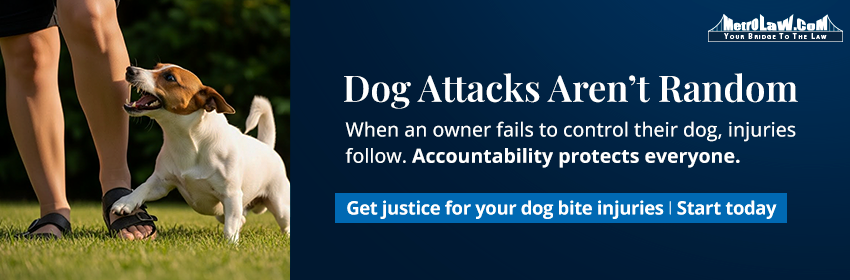
How New Jersey’s Strict Liability Rule Applies
Under state law, fault does not depend on the dog’s history. The focus is on where the bite happened and whether the person had a legal right to be there.
This rule commonly applies when bites occur:
- On public sidewalks along Washington Street
- In parks like Church Square Park or Pier A Park
- Inside apartment building hallways or shared spaces
What “Lawfully Present” Means in Real Situations
Being lawfully present includes more than just walking down the street. Many everyday activities in Hoboken fall under this protection.
Examples include:
- Visiting a friend’s apartment
- Entering a building as a guest or delivery worker
- Walking through a shared courtyard or lobby
When Dog Owner Responsibility May Be Disputed
Some cases involve arguments that can complicate liability. These issues do not automatically defeat a claim, but they require closer review.
Disputes often involve:
- Allegations that the dog was provoked
- Claims the victim ignored the posted warnings
- Questions about access to private property
Does a Dog Owner Have to Pay if the Bite Happened Inside an Apartment Building in Hoboken?
Yes. Dog owners can still be held responsible for bites that happen inside apartments or common areas, as long as the injured person had a legal right to be there.
If you’re not sure whether a dog bite claim applies to your situation, talk to our dog bite attorney to learn more about how we may be able to help.
Where Do Dog Bite Incidents Commonly Happen in Hoboken?
Dog bite incidents in Hoboken tend to occur in areas where people and dogs interact frequently, and space is shared closely. High pedestrian traffic, combined with pets in parks, walkways, and residential buildings, increases the likelihood of bites in predictable spots around the city.
Public Walkways and Parks With Heavy Foot Traffic
Open, busy areas where people walk dogs or pass through often show higher bite reports. These include:
- Sidewalks on Washington Street near shops and cafés
- Church Square Park dog areas
- Pier A Park paths along the waterfront
- Streets near Hoboken Terminal and transit hubs
Shared Residential Spaces and Multi-Unit Buildings
Dog bites inside or near apartment buildings often occur where pets and residents cross paths in confined areas. Common sites include:
- Hallways and elevators in mid-rise buildings
- Shared courtyards or lobbies in downtown complexes
- Delivery access points on Newark Street and the surrounding blocks
Why Bite Incidents Happen More Often in Urban Settings
Studies show dog bites are common nationwide, with millions reported each year and nearly one in five bites requiring medical attention, according to CDC reports. In tight urban environments like Hoboken, close interaction, busy walkways, and distractions can contribute to situations where dogs feel threatened or overwhelmed and may react defensively.
When Does Dog Bite Incidents More Likely to Occur?
Incidents often spike when the city is most active, early mornings near commutes, afternoon dog walks, and weekends during events or farmers’ markets.
Common Injuries in Hoboken Dog Bite Cases
Dog bite injuries in Hoboken often range from minor wounds to serious, life-altering harm. The severity depends on the dog’s size, the force of the bite, and the location of the injury. Even injuries that look manageable at first can lead to infection, scarring, or long-term complications.
Physical Injuries Frequently Seen After Dog Bites
Many victims require immediate medical care, especially when bites occur in public areas or crowded residential settings.
Common physical injuries include:
- Deep puncture wounds and torn skin
- Lacerations requiring stitches
- Nerve or tendon damage
- Fractures in hands, arms, or faces
Bites to the hands or face are especially common on busy sidewalks like Washington Street or in shared apartment hallways.
Infection and Medical Complications
Dog bites carry a high risk of infection, particularly when treatment is delayed. Infections can develop quickly and may require antibiotics or further procedures.
Potential complications include:
- Cellulitis and tissue infections
- Rabies exposure concerns
- Scarring that worsens over time
Emotional and Psychological Injuries
Not all injuries are visible. Many victims, especially children, experience lasting fear after a dog attack.
These effects may include:
- Anxiety around dogs or public spaces
- Sleep disruption or behavioral changes
- Avoid parks like Church Square Park or waterfront paths
Can a Dog Bite Cause Long-Term Injuries Even if the Wound Heals?
Yes. Nerve damage, scarring, and psychological trauma can persist long after the skin heals, which is why proper medical care and documentation are important early on.

How Is Compensation Calculated in a Dog Bite Case?
Compensation in a Hoboken dog bite case is based on the severity of the injuries, the cost of medical care, and how the bite affects the victim’s daily life. There is no fixed amount. Each case is evaluated based on documented losses and the injury’s long-term impact.
Medical Costs and Ongoing Treatment
Medical expenses often make up the foundation of a dog bite claim. Even a single bite can require follow-up care long after the initial visit.
Compensation may account for:
- Emergency room or urgent care treatment
- Follow-up visits and wound care
- Infection treatment or rabies precautions
- Future medical needs tied to complications
Lost Income and Daily Disruptions
Dog bites frequently interfere with work and routine activities, especially when injuries involve hands, arms, or legs.
Damages may include:
- Missed workdays or reduced hours
- Loss of earning capacity for physical jobs
- Transportation challenges during recovery
These losses are common for residents commuting through areas like the Hoboken Terminal or working in nearby commercial districts.
Pain, Scarring, and Lasting Effects
Beyond financial costs, dog bites often leave visible and lasting marks. Scarring and discomfort can affect confidence and quality of life.
This part of compensation may reflect:
- Physical pain during recovery
- Permanent scarring or disfigurement
- Emotional stress tied to the incident
Why Location and Circumstances Matter
Where and how the bite occurred influences the assessment of damages. Incidents in public places like Pier A Park or shared residential spaces often involve clearer liability and insurance coverage, which can shape the value of a claim.
How Leash Laws and Local Ordinances Affect Dog Bite Claims in Hoboken
Leash laws and local ordinances can play an important role in Hoboken dog bite claims, especially when a bite happens in a public or shared space. While New Jersey’s dog bite law imposes strict liability, violations of local rules can strengthen a claim and help clarify responsibility.
Hoboken Leash Rules in Public Areas
Hoboken requires dogs to be leashed in most public places. These rules are meant to reduce risk in crowded areas where people and pets share limited space.
Leash requirements commonly apply in:
- Sidewalks along Washington Street and Newark Street
- Church Square Park and Pier A Park
- Waterfront walkways and residential streets
How Ordinance Violations Support a Claim
When a dog is off-leash where it should not be, that fact can become an important part of the case. It helps show that the owner failed to follow basic safety rules.
Ordinance violations may help establish:
- Carelessness in handling the dog
- Foreseeable risk to pedestrians
- Stronger leverage with insurance carriers
Leash Laws and Apartment Buildings
Some dog bite cases involve shared residential spaces rather than public streets. While apartment buildings often have their own pet policies, these rules do not determine legal liability or compensation under New Jersey dog bite law.
However, violations of building rules, such as not leashing a dog in hallways or elevators, can provide context for how the dog was being handled at the time of the bite. Compensation is still based on the victim’s documented injuries, medical costs, lost income, and pain and suffering, rather than the building’s internal rules.
Why Local Rules Still Matter Under Strict Liability
Even though a leash violation is not required to prove a dog bite case, local ordinances add important context. They help explain how the bite happened and why it could have been prevented, especially in a dense city like Hoboken.
What if the Dog Owner Denies Responsibility?
If a dog owner denies responsibility after a bite in Hoboken, the claim does not automatically end. Many owners dispute what happened, but New Jersey law allows victims to move forward by relying on evidence, location details, and medical documentation rather than the owner’s version of events.
Common Reasons Owners Deny Fault
Denials often follow predictable patterns, especially when a bite happens in a public or shared area.
Owners may claim:
- The dog was provoked.
- The victim was not supposed to be there.
- The injury happened somewhere else.
- The bite was minor or accidental.
These arguments are common after incidents near busy sidewalks, such as Washington Street, or in apartment buildings.
How Evidence Counters These Claims
Objective proof matters more than statements. In Hoboken, many locations offer built-in documentation that can clarify what happened.
Helpful evidence may include:
- Surveillance footage from nearby shops or residential buildings
- Photos of the injury and the exact location
- Medical records showing the timing and severity of the bite
- Witness accounts from pedestrians or neighbors
How Early Action Matters When Responsibility Is Disputed
The longer a dispute goes on, the harder it can be to secure reliable proof. Footage may be deleted, and witnesses may become harder to locate. Taking early steps helps preserve details tied to specific locations, whether the bite happened near Church Square Park, a waterfront walkway, or a shared building entrance.
Dog Bite Claims vs. Other Personal Injury Cases in New Jersey
Dog bite claims in New Jersey are handled differently from most other personal injury cases because they are based on strict liability. This means the injured person does not have to prove the dog owner was careless, only that the bite occurred and the victim had a legal right to be there.
Why Dog Bite Claims Are Easier to Prove
Unlike car accidents or slip-and-fall cases, dog bite claims do not require showing that the owner was negligent. This legal structure can simplify the process when the facts are clear.
Key differences include:
- No need to prove prior aggression
- Limited defenses for dog owners
- Focus on location and lawful presence
This is especially helpful in busy areas of Hoboken, such as Washington Street or Pier A Park.

How Other Injury Claims Work
Most other personal injury cases rely on negligence. That means showing someone failed to act reasonably under the circumstances.
These cases often involve:
- Disputes over fault
- Conflicting witness accounts
- Longer investigations
For example, a fall inside a Hoboken apartment building or a crash near the Hoboken Terminal may involve more complex liability analysis.
Why These Differences Matter For Compensation
Because dog bite cases follow a different legal standard, they may move faster when the evidence is clear. However, injuries and damages must still be fully documented to support compensation.
Is a Dog Bite Claim Less Complicated Than a Car Accident Case in Hoboken?
Often yes. Dog bite claims usually involve fewer legal hurdles because strict liability applies, though the outcome still depends on injury severity and proper documentation.
How We Prove a Dog Bite Case in Hoboken
Our lawyers prove a dog bite case by documenting the bite, confirming the victim had a legal right to be there, and tying the injuries to clear medical evidence. In Hoboken, that also means securing location-based proof fast, because footage and witnesses in high-traffic areas can disappear quickly.
Step 1: Confirm Where the Bite Happened and Why It Matters
We pin down the exact location and the circumstances. A bite on a Washington Street sidewalk is treated differently than one inside a private hallway, and those details shape how the claim is built.
We document:
- The precise address or nearby landmark
- Photos of the area and any visible conditions
- Whether it happened in a public space or shared property
Step 2: Establish Lawful Presence and Address Common Pushback
We show the injured person was allowed to be there, which is central under New Jersey’s dog bite rules. This can apply to guests, tenants, delivery workers, and people simply walking through the city.
Our firm gathers:
- Entry context (guest, resident, service visit)
- Any building access information
- Witness statements confirming why the person was there
Step 3: Identify the Dog Owner and Available Coverage
We confirm who owns or controls the dog and check for any applicable insurance coverage. In Hoboken, that often means checking homeowner’s, renter’s, or building-related policies.
We may use:
- Owner contact and pet records
- Prior complaint documentation, if available
- Insurance policy information
Step 4: Prove the Injury With Medical Records and Clear Documentation
Medical documentation is the backbone of damages. We connect the bite to the treatment and track how it affects work and day-to-day life.
Key proof includes:
- ER or urgent care records
- Follow-up treatment notes
- Photos showing healing, scarring, or complications
Step 5: Build a Settlement Demand That Matches the Real Impact
We pull the evidence into a clear claim package and push for compensation that reflects both costs and long-term effects. Cases involving visible scarring or hand injuries often require extra attention because the impact can last. If the other side refuses to be reasonable, we prepare the case for filing in Hudson County.
What to Do Next After a Dog Bite in Hoboken
After a dog bite in Hoboken, the next step is to protect your health, preserve what matters for a claim, and avoid early mistakes that can limit your options. Taking a few informed actions now can make a meaningful difference in how the situation is resolved.
Focus on Follow-Up Medical Care
Even after initial treatment, dog bite injuries often require continued care. Infections, nerve issues, and scarring may not show up right away.
Make sure to:
- Attend follow-up appointments.
- Follow wound care instructions.
- Keep records of prescriptions and treatment.
This documentation helps connect the injury to ongoing effects.
Limit Contact With the Dog Owner and Insurers
After a bite, owners or insurance representatives may reach out quickly. These conversations can affect a claim if handled carelessly.
Before speaking with anyone:
- Avoid recorded statements.
- Do not agree to informal payments.
- Do not downplay your injuries.
This is especially important when bites happen in shared spaces like apartment buildings or public areas near Washington Street.
Preserve Details While They Are Fresh
Small details fade quickly. Writing down what you remember can help later, especially in busy areas where witnesses move on.
Consider saving:
- The date, time, and exact location
- Photos of the injury as it heals
- Names of any witnesses
Understand That Legal Help Can Be a Practical Step
Talking with a dog bite lawyer does not mean filing a lawsuit immediately. It means getting clarity on your rights and next steps under New Jersey law. For Hoboken residents, local experience matters. Knowing how these cases are handled and where evidence comes from can help you move forward with confidence and fewer surprises.
Frequently Asked Questions
1. Do I Have to Report a Dog Bite to the City of Hoboken?
Yes. Dog bites are typically reported to local health or animal control authorities so the dog can be identified and monitored. Reporting also creates an official record, which can be helpful if the bite occurred in a public area such as Washington Street or a city park.
2. Can I File a Claim if the Dog Bite Did Not Break the Skin?
Yes. Even bites that do not puncture the skin can cause nerve damage, bruising, or infection. Medical documentation is still important, especially if symptoms worsen after the incident.
3. What if the Dog Belonged to a Neighbor or Friend?
You can still file a claim. In many cases, compensation comes from an insurance policy rather than from the owner directly. This allows injuries to be addressed without turning the situation into a personal dispute.
4. How Long Do I Have to File a Dog Bite Claim in New Jersey?
Most dog bite claims must be filed within two years. Waiting too long can make it harder to gather evidence, especially in busy Hoboken areas where footage and witnesses may not be available later.
5. What if the Dog Bite Happened in an Apartment Building?
Dog bite claims often arise in hallways, elevators, or shared courtyards. These cases depend on lawful presence and building rules, not just where the bite occurred.
6. Can Children Recover Compensation For Dog Bite Injuries?
Yes. Children can recover compensation through a legal guardian. Because children are more likely to suffer facial injuries or lasting trauma, these claims often require careful documentation.
7. Does Renters Insurance Cover Dog Bite Claims?
Often yes. Many dog bite claims are covered under renters’ or homeowners’ insurance, depending on the policy and the dog involved. Coverage details vary and should be reviewed closely.
8. Should I Talk to a Lawyer Even if the Bite Seems Minor?
Yes. Minor bites can lead to complications, and early guidance can help you avoid mistakes. A short conversation can clarify whether further steps are worth taking.
Click here to access more frequently asked questions about different lawsuits and claims all across Hoboken and New Jersey.
Speak With a Hoboken Dog Bite Lawyer Today
Dog bite injuries can leave lasting physical, emotional, and financial effects, even when the incident seems minor at first. In a busy city like Hoboken, where dog bites often happen in shared public and residential spaces, having clear guidance matters.
If you or a loved one was bitten by a dog, Metro Law can help you understand your options and next steps. Call us at 973-344-6587 to speak with an experienced Hoboken dog bite lawyer today.