
If you were bitten by a dog in Newark, you should contact a dog bite lawyer as soon as the injury happens, and you should contact one who actually handles cases in this city.
Dog bite claims in New Jersey move fast, involve strict liability rules, and often trigger insurance pushback right away.
A local lawyer steps in early to protect your rights, preserve evidence, and deal with insurers before mistakes cost you compensation.
Dog bites happen across Newark every day, outside apartment buildings in the Ironbound, on sidewalks near Broad Street, in parks like Branch Brook Park, or while visiting friends and family in residential neighborhoods.
Even bites that seem minor can lead to infections, scarring, nerve damage, or long-term trauma. Waiting to get legal help often means losing leverage before you even realize it.
At MetroLaw.com, we represent Newark dog bite victims from the first phone call forward. We know the city, the courts, and how these cases are actually handled in Essex County.
Our job is to take the legal and insurance pressure off you while we build a strong, local case around what happened and how it’s affecting your life.
Dog bite injuries in Newark range from deep puncture wounds to permanent scarring and emotional trauma, depending on where the attack happens and how quickly medical care is received. We regularly see injuries from bites that occur on sidewalks, in apartment hallways, and in busy public spaces where dogs and people are close together.
Many bites happen in high-foot-traffic areas like Branch Brook Park, near bus stops on Broad Street, or outside multi-family buildings in the Ironbound. In those settings, victims often don’t have time to react, which leads to more severe injuries.
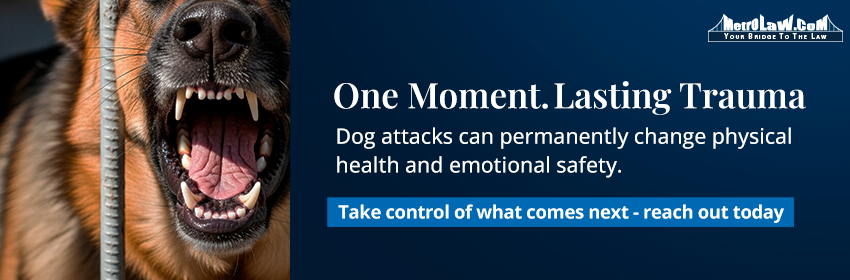
Dog bites frequently cause deep puncture wounds that damage skin, muscle, and tissue beneath the surface. These injuries may look small at first, but often require stitches or surgical cleaning to prevent infection. Bites to the hands, arms, and legs are especially common in Newark sidewalk and stairwell incidents.
Infections are a significant concern, particularly when bites occur outdoors or near trash-heavy areas. Victims treated at emergency rooms like University Hospital are often prescribed antibiotics, but complications can still develop days later.
Children and shorter adults are more likely to suffer bites to the face or neck. These injuries are common in residential neighborhoods where dogs are not properly restrained and can result in permanent scarring or disfigurement.
Some dog bites damage nerves, leading to numbness, weakness, or limited movement. We often see this in bites involving the hands or forearms, especially in incidents near entryways or elevators in apartment buildings.
Not all injuries are visible. Many Newark dog bite victims experience anxiety, sleep disruption, or fear of walking in their own neighborhood after an attack.
Each injury affects your case differently, and proper documentation from the start plays a major role in how compensation is calculated.
New Jersey law makes dog bite cases more straightforward than many other injury claims by holding dog owners legally responsible in most situations.
If a dog bites someone in a public place or while the person is legally on private property, the dog's owner is typically held responsible for the injuries, even if the dog has never previously shown aggression.
This is particularly relevant in a city like Newark, where dog bites frequently occur on sidewalks near Broad Street, in shared hallways of apartment buildings, or in public areas such as Military Park.
In these settings, the law focuses less on the dog’s history and more on where the bite occurred and whether the victim had a legal right to be there.
New Jersey follows a strict liability rule for dog bites. This means the injured person does not have to prove the dog owner acted carelessly or knew the dog was dangerous.
Instead, the claim centers on two key points:
If those conditions are met, liability typically attaches automatically, whether the bite happened in a neighborhood park or outside a storefront along Market Street.
Strict liability covers many everyday situations in Newark. These include:
The law does not require the victim to anticipate danger or avoid the dog. If the bite occurs during regular activity, the owner is usually responsible.
There are limited circumstances where liability may be reduced or challenged. Dog owners may argue that the victim provoked the dog or was trespassing at the time of the bite.
These disputes often come up in backyard incidents or in shared spaces where access rules are unclear. Evidence such as witness statements, property boundaries, and surveillance footage from nearby buildings can become critical in these cases.
In densely populated Newark neighborhoods like the Ironbound or the North Ward, dogs are often walked in tight spaces with heavy foot traffic. This increases the likelihood of disputes about control, leashes, and proximity.
Local ordinances, housing rules, and police or animal control reports can all influence how a claim is evaluated and resolved.
Strict liability allows injured victims to focus on medical recovery while pursuing compensation without having to prove negligence. A local attorney can apply this rule strategically to protect your claim and push back against insurance defenses.
In most dog bite cases, New Jersey law gives you two years from the date of the bite to file a legal claim. If that deadline passes, you typically lose the right to recover compensation, no matter how serious the injury or how clear the liability may be.
This time limit applies to dog bites that happen anywhere in Newark, whether the incident occurred on a residential street in the North Ward, near a business along Broad Street, or inside a shared apartment building in the Ironbound. The clock usually starts running on the day the bite happens, not when treatment ends.
New Jersey’s statute of limitations for personal injury cases, including dog bites, is strict. Courts do not make exceptions simply because an injury worsens over time or because negotiations with an insurance company are ongoing.
Key points to keep in mind:
Once the two-year window closes, courts in Essex County will almost always dismiss the claim.
Waiting too long to act can create problems well before the deadline arrives. Evidence fades, witnesses become harder to locate, and details about the incident can become unclear.
In a city like Newark, this is especially true for bites that happen in public spaces such as Branch Brook Park or near transit-heavy areas where foot traffic is constant. Early action helps preserve reports, photos, and statements while they are still reliable.
You can review New Jersey’s specific dog bite laws and what they mean for your case on the New Jersey Coalition Against Dog Abuse page.
Certain situations can change when the clock starts. These exceptions are limited and depend heavily on the facts of the case.
Examples include:
These scenarios require careful legal analysis and should never be assumed without guidance.
Starting the legal process well before the deadline provides room to build a stronger claim. It allows time to gather medical records, investigate the dog owner’s insurance, and prepare for negotiations or litigation if needed.
For Newark dog bite victims, acting early often makes the difference between a rushed filing and a well-supported case that reflects the full impact of the injury.
Yes, you can still file a claim even if the dog has never bitten anyone before. In New Jersey, a dog owner can be held responsible for a bite regardless of the dog's prior behavior. The law focuses on the specific incident and the circumstances surrounding the bite.
This is especially important in a city like Newark, where dog bites often happen during ordinary activities, such as walking near Branch Brook Park, entering an apartment building in the Ironbound, or passing someone with a dog along Market Street. A first-time bite is still treated as a valid injury under the law.

New Jersey applies a legal standard that does not require proof of prior attacks. As long as the bite occurred in a public place or while the injured person was lawfully on private property, the owner may be liable.
The claim does not depend on:
This approach protects victims who had no reason to expect danger.
Many first-time bites happen when dogs are overstimulated or improperly controlled in busy environments. Newark’s density increases these risks.
Typical scenarios include:
These incidents frequently occur near sidewalks, entryways, and shared outdoor spaces.
Owners and insurance companies often argue that a dog’s clean history should excuse responsibility. While this argument may sound reasonable, it usually carries little legal weight.
What matters more is:
Evidence and documentation help counter these defenses.
Even without a history of aggression, a claim can be well-supported through medical records, witness statements, and incident reports. These details help show how the bite occurred and the extent of the harm caused.
No, a dog bite does not need to be intentional or predictable for a claim to exist. The focus remains on the injury and the circumstances surrounding it.
You can find helpful information on dog behavior and responsible pet ownership at the CDC’s Healthy Pets, Healthy People page.
A dog bite victim in Newark may recover compensation for medical costs, lost income, pain, emotional distress, and long-term physical impact caused by the attack. The exact value depends on the severity of the injuries, how the bite affects daily life, and the available insurance coverage tied to the dog owner.
Dog bites across Newark happen in many everyday settings, outside homes in the Ironbound, near storefronts along Broad Street, or in public areas like Branch Brook Park. Compensation is designed to account not just for the initial injury, but for how it disrupts work, mobility, and personal routines.
Medical costs often form the foundation of a dog bite claim. These expenses go beyond the emergency room visit and can continue for months.
Recoverable medical damages may include:
Treatment at facilities such as University Hospital or local urgent care centers can add up quickly, even for bites that first appear minor.
Many victims miss work reminders because of pain, infection risk, or restricted movement. For Newark residents working in service, transportation, or healthcare roles, even short absences can create financial strain.
Compensation may cover:
Dog bites often leave lasting physical and emotional marks. Visible scarring, especially on the arms, legs, or face, can affect confidence and daily interactions.
Non-economic damages may include:
These effects are common after bites in crowded residential areas where victims feel unsafe returning to normal routines.
Some injuries create ongoing needs long after the wound heals. Nerve damage, limited mobility, or psychological trauma can require extended care.
Future-related damages can account for:
The strength of medical documentation, injury severity, and how clearly the incident can be proven all influence compensation. A local attorney evaluates these factors to pursue a recovery that reflects the full impact of the bite.
Even if the dog owner does not have insurance, you may still have options to recover compensation after a dog bite in Newark.
While insurance coverage often makes claims smoother, the absence of a policy does not automatically end your case or your right to pursue financial recovery.
This situation comes up more often in Newark than many people expect, especially in rental properties, multi-family homes, or informal living arrangements in neighborhoods like the Ironbound or the South Ward. The next steps depend on where the bite happened and how the dog was being kept.
When no insurance applies, one option is to pursue a claim directly against the dog owner. This involves seeking compensation from the owner’s personal assets rather than an insurance policy.
This approach may be appropriate when:
These cases require careful evaluation, particularly when the incident occurs near private residences or shared spaces along streets like Clinton Avenue.
In some situations, insurance coverage exists even when the dog owner initially claims there is none. Policies can be overlooked or misunderstood.
Possible sources of coverage include:
This is especially relevant in Newark apartment buildings, where multiple policies may overlap.
Dog bites in rental properties raise additional questions about responsibility. If a landlord knew a dangerous dog was present and failed to act, liability may extend beyond the owner.
These cases often involve:
Evidence from building management and neighbor statements can play a key role.

Not every uninsured case is worth pursuing. Legal costs, collectability, and injury severity all factor into whether moving forward is practical.
A local attorney can review the facts, explain realistic outcomes, and help you decide on the best path forward based on the circumstances of your Newark dog bite.
Dog bite claims follow a different legal and practical path than most injury cases because responsibility is often clearer, timelines move faster, and the injuries involve unique medical and emotional factors.
In Newark, these differences can significantly affect how a claim is investigated, valued, and resolved.
Unlike car accidents or slip-and-fall cases, dog bite claims usually do not revolve around proving careless behavior. When a bite happens on a sidewalk, in a park, or inside a residential building, the legal focus shifts quickly to location, access rights, and injury impact.
Most injury cases require showing that someone acted negligently. Dog bite claims work differently because liability is frequently established early in the process.
In Newark settings like Branch Brook Park, shared hallways in the Ironbound, or entryways along Broad Street, the key questions are:
This structure reduces debate over fault and moves the case toward damages more quickly.
Dog bite injuries tend to involve complex medical issues that are not always visible immediately. Infections, nerve damage, and scarring can develop days or weeks after the incident.
Claims often rely heavily on:
Hospitals like University Hospital frequently see these cases escalate after initial treatment, which makes thorough medical tracking essential.
Unlike many other injury cases, dog bite claims commonly include emotional trauma as a core component. Victims may develop anxiety about walking in their neighborhood or fear of encountering dogs again.
This is especially common after bites in residential areas or near schools and parks, where daily routines are disrupted. The emotional impact in these cases is significant and is part of the primary harm.
Dog bite claims are often handled through homeowner’s or renter’s insurance rather than auto or commercial policies. These insurers approach cases differently and may push for quick settlements before the full impact of the injury is known.
In Newark, this often happens after bites near apartment complexes or private homes, and insurers move fast to limit exposure. Early legal involvement helps balance that pressure.
Dog bite cases depend on early documentation. Scene conditions change fast, especially in busy city areas.
Important evidence may include:
Delays can make this information harder to recover.
Visible injuries such as scarring or facial wounds carry a different weight than internal injuries. Dog bite cases often involve both, requiring careful presentation.
In crowded Newark neighborhoods, visible injuries can affect work, social interaction, and confidence in ways other injury cases do not.
Because fault is less disputed, dog bite claims may resolve sooner than other injury cases. That speed can be helpful or harmful, depending on preparation.
Without a complete understanding of future medical needs, early resolution may undervalue the claim. Proper timing matters.
These cases demand a focused approach that accounts for medical progression, emotional impact, and insurance behavior. Treating a dog bite like a standard injury claim often leaves compensation on the table, especially in a city as dense and active as Newark.
We prove a Newark dog bite case by locking down the facts early, where it happened, who controlled the dog, and how the injuries changed your life, then backing it with medical proof, reports, and witness accounts. The strongest cases are built fast, before stories shift and evidence disappears in a busy city.
Dog bites can occur in various locations, from a front stoop in the Ironbound to a sidewalk near Military Park. When these incidents happen, our priority is to transform what occurred into a well-documented claim that an insurance company cannot dismiss or minimize as just a minor issue.
At MetroLaw.com, our team of experienced attorneys is dedicated to guiding you through every step of the legal process. We understand that navigating legal challenges can be daunting, which is why we are committed to providing you with personalized support and expert advice tailored to your unique circumstances. Our attorneys are well-versed in a variety of practice areas, ensuring that you receive comprehensive assistance whether you're facing a complex litigation issue or seeking consultation for a legal matter. With a focus on delivering clear communication and practical strategies, we strive to empower our clients and help them achieve favorable outcomes.
We start with the medical paper trail and visual proof. Dog bite wounds evolve, so early and ongoing documentation matters.
Liability often turns on where the bite occurred and whether you had a legal right to be there. Newark locations can be tight and disputed, especially around multi-family buildings.
We confirm:
Official reporting adds credibility and creates a timeline that’s hard to argue with later. We obtain available records connected to the incident.
This can include:
In Newark, witnesses can be neighbors, delivery drivers, or people passing through on Market Street or along Broad Street. We move quickly to capture contact info and statements before memories fade.
We look for:
Not every case is limited to a single policy. We investigate coverage and responsibility based on the living situation and property setup.
Possible sources include:
A case is not just about proving a bite happened. It’s about proving what it costs you, financially, physically, and personally.
We organize:

Dog bite claims can be weakened by simple mistakes made in the hours or weeks after an attack. In Newark, these missteps often give insurance companies room to question injuries, shift blame, or minimize the value of a case before it fully develops.
Because dog bites frequently happen in fast-moving environments, like sidewalks near Broad Street or shared spaces in apartment buildings, what you do following matters just as much as what happened during the incident.
Delaying treatment is one of the most common issues we see. Dog bite wounds can look minor at first, but worsen quickly due to infection.
Waiting allows insurers to argue:
Early treatment creates a clear medical timeline.
Insurance adjusters often reach out quickly, sometimes within days of the bite. Their goal is to limit payouts, not protect your interests.
Common problems include:
These conversations are often used to undermine the claim later.
In a busy city like Newark, scenes change fast. Witnesses leave, conditions shift, and evidence disappears.
Missing documentation can include:
This is especially true near public spaces like Military Park or high-traffic residential areas.
Social media activity can quietly damage a claim. Even innocent posts can be taken out of context.
Insurers look for:
Silence online is often the safest choice.
Skipping appointments or therapy can make injuries appear resolved when they are not. Gaps in care raise questions about severity.
Consistent follow-up helps show:
Even with favorable laws, dog bite claims are not self-proving. Failing to act early or protect evidence can still weaken an otherwise valid case.
Avoiding these mistakes helps preserve the strength of your claim and puts you in a better position to pursue full compensation for what you’ve been through.
Newark dog bite victims choose MetroLaw.com because we handle these cases with local focus, direct attorney involvement, and a clear plan from day one. We understand how dog bite claims actually work in this city and build cases that reflect real injuries, real neighborhoods, and real outcomes.
From incidents near Branch Brook Park to bites outside apartment buildings in the Ironbound or along Broad Street, we know the patterns, the insurers, and the courts that handle these claims in Essex County. That familiarity matters when every detail counts.
Handling cases in Newark means understanding how and where incidents happen. Dense housing, shared spaces, and heavy foot traffic all influence how dog bite claims unfold.
Our approach accounts for:
At MetroLaw.com, you are not passed off to a case manager or shuffled between departments. Your case is handled by an attorney who stays involved from start to finish.
This means:
Dog bite cases involve medical, emotional, and long-term considerations that generic injury handling can miss. We take the time to understand how the injury affects your daily life, not just what appears on a bill.
We pay close attention to:
Access to legal help should not depend on your financial situation after an injury. Our fee structure reflects that.
Clients can expect:
You can hear directly from past clients about their experience with our firm by visiting our Client Testimonials page.
We work with Newark residents, families, and workers every day. From downtown office workers to long-term neighborhood residents, our practice is built around serving this city.
That local commitment shapes how we communicate, prepare cases, and fight for outcomes that truly reflect what Newark dog bite victims go through.
Yes, dog bites that occur in common areas such as hallways, stairwells, or entryways can be valid claims, particularly in multi-family buildings throughout Newark. The key factors to consider are lawful access and who had control of the dog at the time.
Leash use can affect how the incident is evaluated, but it does not automatically eliminate liability. Even leashed dogs can cause serious injuries if not adequately controlled in crowded areas like sidewalks near Broad Street.
Yes, personal relationships do not alter your legal rights. Most dog bite claims are settled through insurance, not directly by the dog owner, even if the owner is a friend or neighbor.
You may still have a claim if you were lawfully on the property. Dog owners are responsible for bites that happen during normal social visits, including in private homes across Newark neighborhoods.
No, New Jersey law does not differentiate dog bite cases by breed or size. Liability is based on the incident, not assumptions regarding the dog type involved.
Yes, anxiety, fear, and emotional distress are common after dog attacks and can be considered part of your damages. These effects become especially significant when the bite alters your daily routines or affects your comfort in public spaces.
Claims can still proceed using medical records, witness statements, and incident-related reports. Documentation becomes especially important when liability is disputed.
Yes, children are fully protected under New Jersey law. Special rules may extend filing deadlines. Claims often focus on scarring, emotional harm, and long-term impacts.
Most dog bite cases settle without a trial. However, preparation for court strengthens negotiation and keeps options open if litigation becomes necessary.
As soon as possible. Early legal involvement helps protect evidence, manage insurance contact, and avoid mistakes that can weaken your claim.
At MetroLaw.com, we are committed to offering thorough assistance for all your legal requirements. We invite you to check out our FAQ section to delve into more commonly asked questions regarding different kinds of claims and lawsuits in New Jersey. Your comprehension is our primary focus, and we are here to support you in navigating the intricacies of the legal system.
After a dog bite in Newark, the following steps are about protecting your health, your rights, and your options. Once medical care is addressed, taking a calm and organized approach helps ensure the incident is properly documented and that nothing important is overlooked.
Whether the bite happened near Branch Brook Park, outside a building along Broad Street, or in a residential neighborhood like the Ironbound, the actions you take early can shape how smoothly the situation is handled.
Details fade quickly, especially in busy areas of Newark. Writing things down while they are fresh can be helpful.
Consider noting:
This information supports accuracy later on.
Understanding how New Jersey dog bite laws apply to your situation allows you to make informed decisions. Speaking with a local attorney can clarify timelines, responsibilities, and what compensation may realistically be available.
Dog bite cases do not have to be overwhelming. With the correct information and guidance, you can focus on recovery while ensuring your interests are protected.
If you would like to discuss your situation, call MetroLaw.com at 973-344-6587 for a free consultation. To explore how we assist clients in other injury and legal matters, complete our online contact form to learn more about our additional practice areas.