
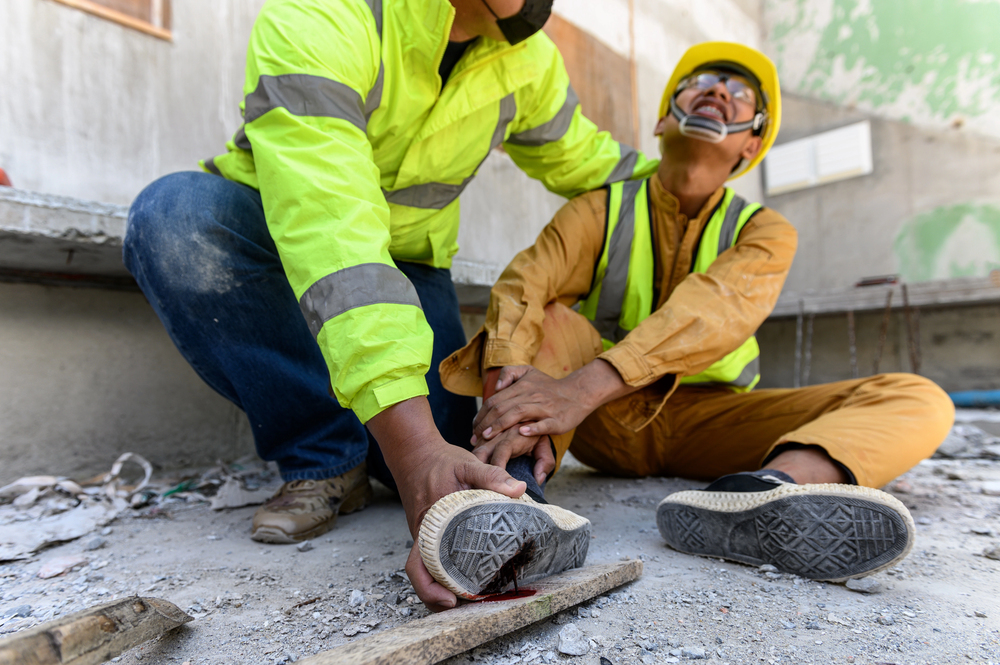
After a construction accident in NJ, an injured worker has two separate paths to recovery: a workers' compensation claim against the employer and a third-party lawsuit against another party whose negligence caused the harm. Understanding the difference matters because the two can sometimes be pursued together and reach very different kinds of damages.
Many injured workers assume workers' compensation is their only option, and that assumption can leave significant recovery on the table when a third party was also at fault. Knowing both paths exist is the first step toward a full recovery.
Workers' compensation is a no-fault system: an injured worker can receive benefits regardless of who caused the accident, but in exchange generally cannot sue their own employer. Benefits cover medical treatment, a portion of lost wages, and permanency awards.
The tradeoff is that workers' compensation does not pay for pain and suffering. For a serious construction injury, that limit can leave a substantial gap between the benefits received and the full scope of the harm.
Workers' compensation also pays only a portion of lost wages, calculated by formula rather than actual earnings. A worker who cannot return to a physical trade may find that those benefits fall well short of the real economic loss.
A third-party claim is a separate lawsuit against someone other than the employer whose negligence contributed to the injury. On a busy construction site, that could be a general contractor, a subcontractor, a property owner, an equipment manufacturer, or a negligent driver.
Unlike workers' compensation, a third-party claim can recover the full measure of damages, including pain and suffering and the complete value of lost earnings. This is often where the most meaningful recovery for a catastrophic injury is found.
Because a third-party claim is fault-based, it requires proving that the other party was negligent. That makes the early investigation of the site, the equipment, and the parties present on the job critical to the case.
An injured worker can frequently pursue both at once: workers' compensation for immediate benefits and a third-party suit for the rest. The two are not mutually exclusive, and together they can address what either alone would miss.
When both succeed, the workers' compensation insurer may assert a lien to be reimbursed out of the third-party recovery. Coordinating the two claims carefully protects the worker's net recovery and avoids leaving money unclaimed.
How that lien is negotiated can significantly affect what the worker ultimately keeps. An attorney who handles both claims together can often reduce the lien and maximize the net result.
Construction injuries trace to causes that point beyond the employer, even when the worker's own company was also involved. A defective machine implicates its manufacturer, an unsafe condition on the premises implicates the property owner, and a subcontractor's careless work implicates that company.
Falls from heights, scaffold collapses, electrocutions, crane and equipment failures, and being struck by vehicles or falling objects are recurring scenarios. Each can raise a third-party theory in addition to the workers' compensation claim.
Safety violations frequently sit behind these incidents, from missing fall protection to unguarded machinery. Evidence of a violation can strengthen a third-party claim by showing the responsible party ignored a known risk.
Report the injury to your employer promptly to protect the workers' compensation claim, and seek medical care right away. Documenting the scene, the equipment, and any unsafe conditions helps a later third-party investigation.
A third-party lawsuit generally must be filed within two years of the injury under N.J.S.A. 2A:14-2, while workers' compensation has its own separate deadlines. Because the third-party investigation depends on preserving the site and equipment before they change, early legal review is important.
The paths differ in fault, defendants, and what they pay.
| Feature | Workers' compensation | Third-party lawsuit |
| Fault required | No | Yes |
| Filed against | The employer | Another negligent party |
| Pain and suffering | Not covered | Recoverable |
| Lost wages | Partial | Full value |
Generally no. Workers' compensation is usually the exclusive remedy against your employer, though a third-party suit against another party may be available.
It is a lawsuit against someone other than your employer, such as a contractor, property owner, or equipment maker, whose negligence caused your injury.
Often yes. The two are separate, and together they can recover benefits and damages that neither would provide alone.
No. Workers' compensation does not pay for pain and suffering, which is one reason a third-party claim can matter.
Common defendants include general contractors, subcontractors, property owners, equipment manufacturers, and negligent drivers.
Generally, two years from the date of injury, while workers' compensation has its own separate deadlines.
Because the third-party path can recover what workers' compensation cannot, identifying every responsible party early can change the outcome of a serious case. Preserving the site and equipment is often time-sensitive. Our New Jersey construction accident lawyer page explains how we pursue both paths, and our workplace injury claims page covers related on-the-job injuries.
If you were hurt on a construction site, the attorneys at Robert A. Solomon, P.C., known as Metro Law, can evaluate both your comp and third-party options. You pay nothing for the consultation, and the firm works on a contingency basis, so a fee is owed only if you recover. Contact us at (800) 469-6476 to get started.
Last reviewed: July 2026
This post was reviewed by Robert A. Solomon, licensed in New Jersey since 1982.
This post is provided for informational purposes only and does not constitute legal advice. Reading it does not create an attorney-client relationship. For advice about your specific situation, consult a licensed attorney.
When a cyclist gets hit in a bike lane, the crash can change a normal...
Serious accidents in New York and New Jersey take place in a wide variety of...
If you are in a car accident in Jersey City, the first hour matters: call...
When traffic slows on the New Jersey Turnpike, Garden State Parkway, I-80, or Route 1,...