
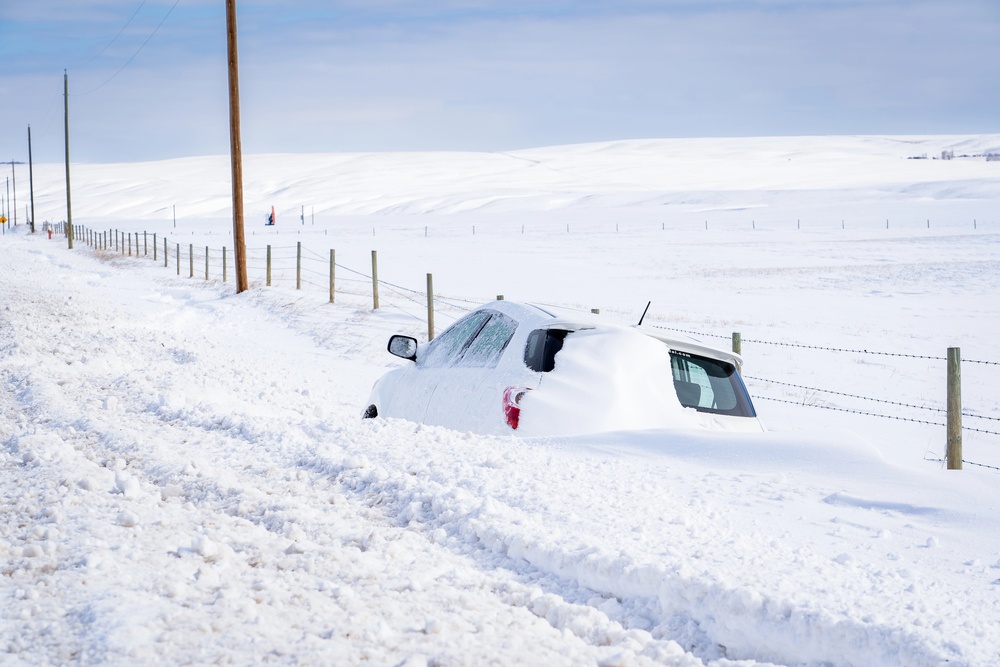
Every winter, drivers across New York and New Jersey face road conditions that turn a routine commute into a safety risk. Snow, black ice, and freezing rain create hazards that even experienced, careful drivers can misjudge, and in two of the most congested states in the country, the consequences can be serious.
Whether you drive the Garden State Parkway daily or occasionally cross the George Washington Bridge, understanding how winter weather affects road conditions can help you make smarter decisions behind the wheel.
And if a snow-related accident has already left you injured, knowing your legal rights after a car accident in New York or New Jersey matters just as much.
New York and New Jersey rank among the most congested driving regions in the United States. That density alone makes winter storms far more dangerous than they would be on open roads. A highway that moves freely on a dry day can become gridlocked when even a few inches of snow fall overnight. Drivers have less room to maneuver, less time to react, and fewer safe options when conditions deteriorate quickly.
The geography of both states adds another layer of difficulty. Drivers regularly move between elevated interstates, urban streets, bridges, overpasses, and tunnels, and each of these surfaces responds differently to cold and precipitation.
A road in Newark may be treated and passable while an entrance ramp to the Garden State Parkway just a mile away is still coated in black ice. That inconsistency is part of what makes winter driving in this region so unpredictable.
Weather variability compounds the problem. Temperatures along the Hudson Valley and the Jersey Shore can swing sharply within a matter of hours, turning snow into sleet or freezing rain before road crews can respond. Conditions you drove through safely in the morning may be far worse by the time you head home.
Snow and ice change how a vehicle handles in ways many drivers underestimate until it's too late. Stopping distances on icy pavement can increase by six to ten times compared to dry road conditions. That gap between what a driver expects and what the road actually delivers is where most winter crashes begin.
Black ice is one of the most dangerous and deceptive hazards on New York and New Jersey roads. It forms when moisture freezes on pavement near 32 degrees, leaving a nearly invisible glaze across the surface.
Bridges, overpasses, shaded highway stretches, and off-ramps across both states are especially prone to it, and drivers often don't realize it's there until they've already lost traction. The National Weather Service issues advisories when black ice risk is elevated; checking those before you drive can make a real difference.
Slush creates a different but equally serious problem. As temperatures rise slightly, packed snow softens into a heavy, wet layer that reduces tire contact with the pavement. Spray thrown by trucks on the New Jersey Turnpike or I-95 can also temporarily blind nearby drivers at the worst possible moment.
Reduced visibility amplifies every other hazard on the road. Blowing snow, fogged windows, and limited winter daylight make it harder to see lane markings, pedestrians, and stopped vehicles ahead. Even a brief loss of visibility at highway speeds can leave a driver with almost no time to react.
Post-storm conditions deserve attention too. Once plows clear major routes, side streets and parking lots in areas like the Bronx, Staten Island, Hoboken, and Elizabeth often stay packed with ice and compacted snow for days. Roads that look plowed and clear may still be dangerously slippery beneath the surface.
This is also when ice and snow injuries on private property become more common, as property owners are required to address hazardous conditions within a reasonable timeframe after a storm.
Rear-end collisions are the most frequent type of snow-related crash in both states. When a driver brakes suddenly on an icy road, the vehicle behind often cannot stop in time, no matter how attentively they were driving. These crashes happen with regularity on the Belt Parkway, Route 1, and the New Jersey Turnpike, where traffic volume is high and stopping room is limited.
Spin-outs occur when a driver overcorrects on a slippery surface or takes a curve too fast for the conditions. In urban areas, a spin-out can push a vehicle into oncoming traffic or a guardrail. On rural roads in Rockland County or Warren County, New Jersey, the same loss of control can send a car off an embankment entirely.
Multi-vehicle pileups are a serious and well-documented risk on high-speed corridors during low-visibility storms. Once one vehicle stops suddenly, trailing vehicles, especially large commercial trucks, can trigger chain-reaction crashes involving dozens of cars.
These incidents have occurred on the Garden State Parkway and the New York State Thruway during past winter storms, and truck accident liability in these situations can be complex to establish.
Lane departure crashes also rise sharply in snowy conditions. Buried road markings make it difficult to stay in lane, especially on narrower city streets and two-lane roads throughout suburban and rural parts of both states.
If you've been involved in any of these types of crashes, understanding what to do in the first 24 hours after a car accident in New York or New Jersey can significantly affect your health, insurance claim, and legal options.
Preparation for winter weather driving matters far more than most drivers give it credit for. Before heading out in a storm, check real-time road condition updates from the New York State Department of Transportation and the New Jersey Department of Transportation.
Both agencies provide current advisories, and county-level travel bans are enforced seriously; ignoring them puts you, your passengers, and everyone else on the road at risk.
Tires can make the difference between maintaining control and losing it. All-season tires perform adequately in light snow, but dedicated winter tires grip ice and packed snow significantly better and can meaningfully reduce your stopping distance. Neither New York nor New Jersey requires them by law, but the performance difference is real.
Give yourself far more time than usual. A 30-minute commute can easily stretch to two hours or more during active snowfall or in its immediate aftermath. Speeding on a snow-covered road to make up for lost time is a consistent factor in winter crashes across both states. Slowing down isn't just safer — it's often the legally required standard when conditions demand it.
Before departure, consider these essential preparation steps:
Bad weather does not eliminate driver responsibility. In both New York and New Jersey, drivers are legally required to adjust their speed and behavior to match current road conditions. A driver who rear-ends another vehicle on an icy road may still be found at fault, even when winter weather clearly played a role in the crash.
When a crash causes injury, the full picture matters. Road conditions, vehicle speed, driver behavior, and property maintenance all factor into what happened and who bears responsibility. Determining fault in a winter accident is often more complex than it appears on the surface, and the involvement of icy roads or reduced visibility does not automatically excuse the at-fault party.
In cases involving serious harm, a catastrophic injury claim may also be relevant depending on the nature and extent of the injuries sustained.
No; both states require drivers to adjust their speed and behavior to match current road conditions, so a driver can still be held at fault even when weather contributed to the crash.
Yes. Property owners in New York and New Jersey have a legal obligation to clear ice and snow within a reasonable time after a storm, and failure to do so can support a premises liability claim.
Yes; insurance companies often move quickly after a crash, and speaking with an attorney before accepting any settlement can help ensure you understand the full value of your claim.
If a snow or ice-related accident left you or someone you love injured, the insurance and liability questions that follow can be difficult to navigate on your own — especially when multiple factors are involved. At MetroLaw.com, our attorneys handle car accident claims across both New York and New Jersey and understand what to look for in winter crash cases.
You can reach MetroLaw.com at 800-469-6476 to speak with our car accident attorneys about your case during a free consultation. We are here to help you understand your options.
Car accidents in New York and New Jersey happen all the time. These two very...

Ride-sharing services like Uber and Lyft have reshaped everyday travel throughout New York and New...
If you are in a car accident in Jersey City, the first hour matters: call...
Settling a personal injury case can feel like the end of a long road. Once...